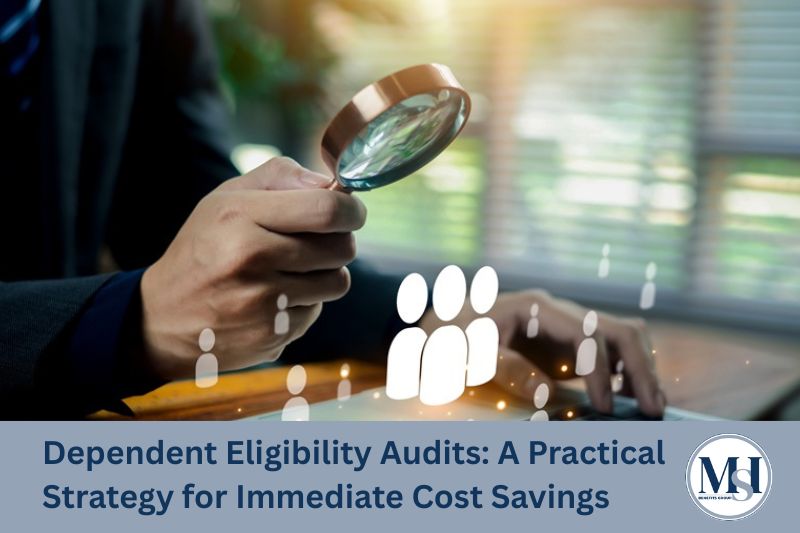
One of the most overlooked contributors to excess healthcare spending is the presence of ineligible dependents on employer-sponsored health plans. Whether due to oversight, misunderstanding, or outdated records, these enrollments can quietly drive up costs year after year.
Dependent eligibility audits offer a straightforward, highly effective way to address this issue, often by delivering immediate and measurable savings without requiring major changes to plan design or employee contributions.
What Is a Dependent Eligibility Audit?
A dependent eligibility audit is a structured review process that verifies whether individuals enrolled as dependents on an employer’s health plan meet the eligibility criteria defined by the plan.
These criteria typically include:
- Legal spouses (as defined by plan terms)
- Children within specified age limits
- Disabled dependents who meet documentation requirements
- Other qualifying dependents, depending on plan design
During an audit, employees are asked to provide documentation such as marriage certificates, birth certificates, or tax records to confirm eligibility. The process is often conducted by a third-party vendor or benefits consultant to ensure consistency and confidentiality.
The Hidden Cost of Ineligible Dependents
It’s more common than many organizations expect: employees unintentionally (or sometimes knowingly) covering individuals who no longer qualify under the plan.
Examples include:
- Ex-spouses who were never removed after divorce
- Adult children who have aged out of eligibility
- Dependents covered under multiple plans without coordination
- Individuals mistakenly classified as eligible
Even a small number of ineligible dependents can significantly impact total healthcare spend. Industry studies suggest that anywhere from 3% to 10% of dependents on a typical plan may be ineligible.
According to the Society for Human Resource Management, dependent eligibility audits can reduce plan costs by several percentage points — often translating into substantial savings for mid-sized and large employers. For additional context on employer-sponsored health coverage trends, the Kaiser Family Foundation provides ongoing research and data here:
https://www.kff.org/report-section/ehbs-2023-section-1-cost-of-health-insurance/
For organizations looking to control costs without shifting more burden onto employees, this represents a rare “low-friction” opportunity.
How the Audit Process Works
While the specifics may vary, most dependent eligibility audits follow a similar structure:
1. Planning and Communication
Clear communication is critical. Employees need to understand:
- Why the audit is being conducted
- What documentation is required
- Deadlines and consequences for non-compliance
Positioning matters. When framed as a fairness and plan sustainability initiative, audits are generally well received.
2. Data Collection and Verification
Employees submit required documents through a secure platform. A third-party auditor reviews submissions against plan eligibility rules.
This step ensures consistency and removes the burden from internal HR teams.
3. Follow-Up and Resolution
Employees who do not respond or whose documentation is incomplete are contacted for follow-up. If eligibility cannot be verified, the dependent is removed from coverage.
4. Ongoing Maintenance
Many organizations choose to implement periodic audits or introduce ongoing verification processes for new dependents to prevent the issue from recurring.
What Employers Typically Find
The results of a dependent eligibility audit can be eye-opening.
Common findings include:
- Former spouses still enrolled years after divorce
- Children exceeding age limits but never removed
- Missing or incomplete documentation for dependents
- Duplicate or overlapping coverage situations
In many cases, employees aren’t acting in bad faith. They simply misunderstand eligibility rules or overlook required updates.
That’s why audits should be approached as a corrective and educational process rather than a punitive one.
Minimizing Disruption and Maintaining Trust
One of the biggest concerns employers have is how an audit might impact employee morale. Done poorly, it can feel invasive. Done well, it reinforces fairness and transparency.
Best practices include:
- Clear, empathetic communication
- Confidential handling of data
- Reasonable timelines
- Support resources for employees
When employees understand that the goal is to ensure fairness and protect the long-term viability of the plan participation tends to improve.
A Complement to Broader Cost Management Strategies
Dependent eligibility audits are not a standalone solution, but they are a powerful complement to broader cost-control strategies.
For example, organizations already exploring plan optimization may also benefit from reviewing how their design influences utilization and engagement. MSI explores this in more detail here:
https://www.msibg.com/plan-design-that-drives-behavior-leveraging-incentives-to-reduce-long-term-costs/
Additionally, accurate enrollment data supports more effective long-term workforce and retention strategies. Learn more about that connection here:
https://www.msibg.com/benefits-as-a-tool-for-employee-retention/
Together, these approaches create a more efficient, sustainable benefits program.
The ROI: Immediate and Ongoing
Unlike many cost-containment initiatives that take time to produce results, dependent eligibility audits often deliver savings almost immediately.
Employers typically see:
- Reduced claims exposure
- Lower plan costs
- Improved data accuracy
- Stronger governance and compliance
And because the audit removes ongoing costs, not just one-time expenses, the financial impact continues year after year.
Key Takeaways for Employers
- ✔ Identify and remove ineligible dependents from your health plan
- ✔ Typical findings: 3–10% of dependents may not meet eligibility criteria
- ✔ Immediate cost savings with minimal disruption
- ✔ Improves data accuracy for long-term planning
- ✔ Reinforces fairness and accountability
- ✔ Best implemented with clear communication and third-party support
Is It Time to Take a Closer Look?
If your organization hasn’t conducted a dependent eligibility audit recently (or at all) it may be time to evaluate the opportunity.
In an environment where healthcare costs continue to rise, ensuring your plan is covering only eligible participants is one of the most practical and impactful steps you can take.
At MSI Benefits Group, we help organizations uncover practical, data-driven opportunities to reduce costs while strengthening the employee benefits experience.
If you’d like to explore whether a dependent eligibility audit makes sense for your organization, contact MSI Benefits Group today. We’ll help you assess potential savings, design a smooth implementation process, and ensure your plan is working as efficiently as possible.