When employers look for ways to control healthcare spending, the conversation often centers on large claims, specialty medications, vendor contracts, and plan design. Those issues deserve attention, but one of the most reliable cost-management tools is also one of the most familiar: preventive care.
Annual physicals, recommended screenings, vaccinations, routine bloodwork, and early intervention may not feel as urgent as a six-figure claim. Their value frequently appears gradually rather than in a dramatic line item. Yet preventive care can influence many of the outcomes employers care about most, including long-term claims, productivity, absenteeism, workforce stability, and employee quality of life.
The challenge is not simply providing preventive care benefits. Most health plans already cover a range of recommended preventive services. The greater opportunity lies in helping employees understand, access, and use those benefits consistently.
For employers seeking sustainable ways to manage healthcare costs, preventive care remains one of the smartest places to invest.
Prevention Helps Identify Health Risks Earlier
Many expensive health conditions do not begin with a medical emergency. They develop slowly, sometimes for years, before symptoms become serious enough to prompt treatment.
High blood pressure, elevated cholesterol, diabetes, certain cancers, and other chronic conditions may be detected through routine examinations and screenings. When these risks are identified early, employees and their healthcare providers may have more options to manage them before they progress.
Earlier detection does not eliminate every serious illness, nor does every preventive service immediately generate measurable savings. However, discovering a condition at a more manageable stage can reduce the likelihood that an employee’s first interaction with the healthcare system occurs in an emergency room or during an avoidable hospitalization.
This is where preventive care fits into a broader cost-containment strategy. It does not replace the need to manage high-cost claims. It may help reduce the number and severity of some claims before they reach that point.
As discussed in MSI’s article on the hidden drivers of rising healthcare costs, employers may have more influence over long-term spending than they realize. Improving access to preventive care is one practical way to exercise that influence.
Better Health Can Support Better Attendance
The financial effect of poor health extends beyond medical and pharmacy claims.
Employees managing untreated or poorly controlled health conditions may miss work for medical appointments, acute episodes, hospitalizations, or recovery. Others may continue working but struggle with fatigue, pain, stress, or reduced concentration. This loss of effectiveness while present at work is often called presenteeism.
Preventive care can help address both concerns by encouraging employees to identify risks earlier, establish relationships with primary care providers, and manage health conditions more consistently.
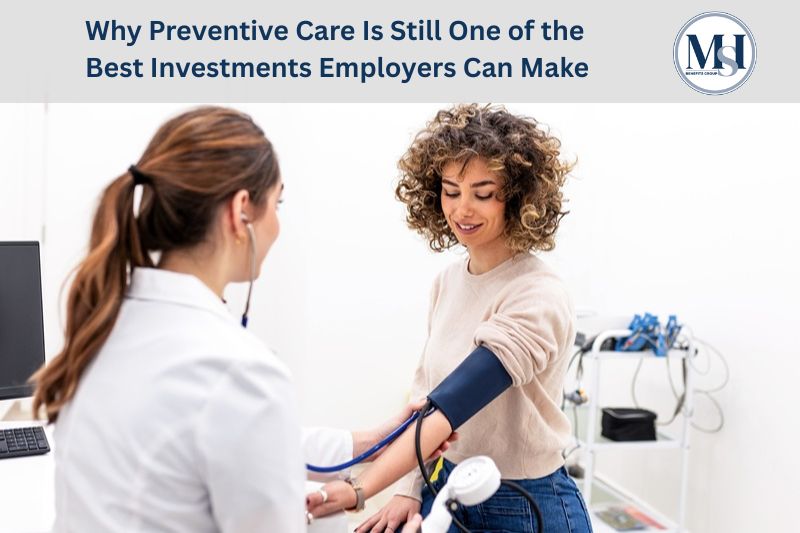
A blood pressure screening, for example, requires little time and may uncover a significant risk. A vaccination may help prevent an illness that would otherwise result in several missed workdays. A routine examination may lead to earlier treatment for a condition that has been quietly affecting an employee’s energy or focus.
No single screening will transform workforce productivity. Across an employee population, however, consistent preventive care can contribute to fewer disruptions, better continuity, and a healthier workforce.
The Centers for Disease Control and Prevention identifies reduced absenteeism, improved productivity, lower healthcare costs, stronger recruitment and retention, and improved workplace morale among the potential benefits of effective workplace health programs.
Preventive Benefits Have Little Value When Employees Do Not Use Them
Many employers already pay for preventive services through their health plans. The problem is that employees may not realize what is available or may face practical barriers that keep them from using those services.
Common obstacles include:
- Uncertainty about which services are covered
- Concern about unexpected costs
- Difficulty finding an in-network provider
- Limited appointment availability
- Transportation or scheduling challenges
- Confusion about whether a visit is considered preventive or diagnostic
- Language, cultural, or health-literacy barriers
- A tendency to delay care until symptoms interfere with daily life
This creates an important distinction: offering preventive care is not the same as achieving preventive care utilization.
Employers can invest in a robust plan and still see disappointing outcomes when communication is unclear or access is inconvenient. A successful strategy must connect coverage with employee behavior.
That does not require overwhelming employees with medical instructions. It requires timely, practical communication that makes the next step easier.
Preventive Care: A High-Value Employer Strategy
Preventive care can help employers:
- Detect health risks before they become more serious
- Support earlier and potentially less intensive treatment
- Reduce avoidable emergency room use and hospitalizations
- Improve management of chronic conditions
- Lower absenteeism and health-related productivity loss
- Help employees better understand and use their benefits
- Build a healthier and more resilient workforce
The key: Coverage alone is not enough. Employees must know which services are available, why they matter, and how to access them.
Five Ways Employers Can Strengthen Preventive Care Utilization
- Make preventive benefits easy to understand
Benefits communication should clearly explain which services are available and where employees can receive them.
Avoid relying entirely on lengthy plan documents or a once-a-year open enrollment presentation. Use concise messages throughout the year to highlight relevant services, such as annual physicals, vaccinations, age-appropriate screenings, prenatal care, and routine health assessments.
Whenever possible, provide employees with direct links to provider directories, scheduling tools, telehealth resources, or carrier information.
- Communicate throughout the year
Health needs do not occur only during open enrollment.
A year-round communication calendar can make preventive care more visible without overwhelming employees. Messages can be connected to seasonal health concerns, national health observances, benefit reminders, or common workforce needs.
The goal is not to send more communication simply for the sake of activity. It is to deliver useful information when employees are most likely to act on it.
- Address practical access barriers
Employees may value preventive care and still find it difficult to schedule.
Employers can review whether their workforce has convenient access to primary care, in-network providers, telehealth, retail clinics, mobile screening programs, or on-site services. Paid time for preventive appointments, flexible scheduling, or partnerships with accessible providers may also improve participation.
The best approach will vary by workforce. A geographically dispersed employer may need different solutions than an organization whose employees report to one central location.
- Use incentives carefully
Well-designed incentives may encourage employees to complete certain preventive activities, but incentives should support a broader strategy rather than substitute for one.
An incentive may prompt an employee to schedule a screening. It will not necessarily solve confusion about coverage, lack of nearby providers, or distrust of the healthcare system.
Employers should also ensure that wellness incentives comply with applicable laws and are structured in a way that respects privacy and avoids penalizing employees facing health or access barriers.
- Measure what is working
Employers cannot improve what they do not examine.
Depending on the available data and privacy requirements, employers may be able to evaluate preventive care utilization, gaps in care, chronic-condition trends, emergency room use, avoidable admissions, and participation in health-management programs.
The purpose is not to inspect individual medical decisions. It is to identify population-level patterns that can guide benefit strategy.
MSI’s article on using visibility and data analytics to improve health plan outcomes explains how claims information can help employers identify cost drivers and make more informed decisions. Preventive care utilization can be an important part of that analysis.
Preventive Care Should Be Targeted, Not Generic
A broad reminder to “get healthy” is unlikely to produce meaningful results.
Employers should consider the characteristics and needs of their workforce. Factors such as age, geography, job type, shift structure, language, provider access, and known health trends can all influence preventive care utilization.
For one workforce, the priority may be improving primary care engagement. For another, it may be increasing diabetes screenings, addressing cardiovascular risk, supporting maternal health, or making behavioral health resources easier to access.
Claims and utilization data can help employers move beyond generic wellness messaging and focus on the areas where improved engagement may have the greatest impact.
This targeted approach also makes communication more relevant. Employees are more likely to respond to information that connects directly to their needs than to broad health campaigns that feel disconnected from their daily lives.
Prevention Is a Long-Term Strategy, Not a Quick Fix
Employers should be cautious about promising immediate savings from every preventive initiative.
Some preventive services may uncover conditions that require additional treatment, increasing claims in the near term. That does not necessarily mean the strategy is failing. It may mean that previously unidentified health needs are finally being addressed.
The value of prevention often becomes clearer over time through improved condition management, fewer complications, better employee engagement, and reduced reliance on high-cost settings of care.
Employers should evaluate preventive care as part of a multiyear benefits strategy rather than judging it solely by the next renewal cycle.
That perspective is especially important when healthcare costs are rising. Short-term cost pressure can tempt organizations to focus only on immediate reductions. Sustainable cost management requires attention to the health risks that may become tomorrow’s major claims.
A Healthier Workforce Is Also a More Resilient Workforce
Preventive care is sometimes treated as a soft benefit, separate from financial strategy. In reality, employee health and organizational performance are closely connected.
A workforce that can access routine care, identify health risks, and manage chronic conditions is better positioned to remain productive and engaged. Employees may also view a clear commitment to preventive health as evidence that their employer values their well-being.
That can support morale, retention, and trust in the benefits program.
Preventive care alone will not solve every healthcare cost challenge. It will not eliminate chronic disease, prevent every serious diagnosis, or replace disciplined oversight of vendors, claims, pharmacy costs, and plan design.
It can, however, strengthen all of those efforts by helping employees interact with the healthcare system earlier and more effectively.
For employers, that makes prevention more than a covered benefit. It makes it an essential component of responsible long-term cost management.
Turn Preventive Care Benefits into Measurable Value
Providing preventive care coverage is an important first step. Creating a strategy that employees understand and use is where the greater value begins.
MSI Benefits Group helps employers evaluate health plan data, identify opportunities for improved engagement, and develop benefits strategies that support both employee health and long-term financial sustainability.
Contact MSI Benefits Group to explore how preventive care, benefits communication, and data-driven planning can work together to strengthen your organization’s health plan.