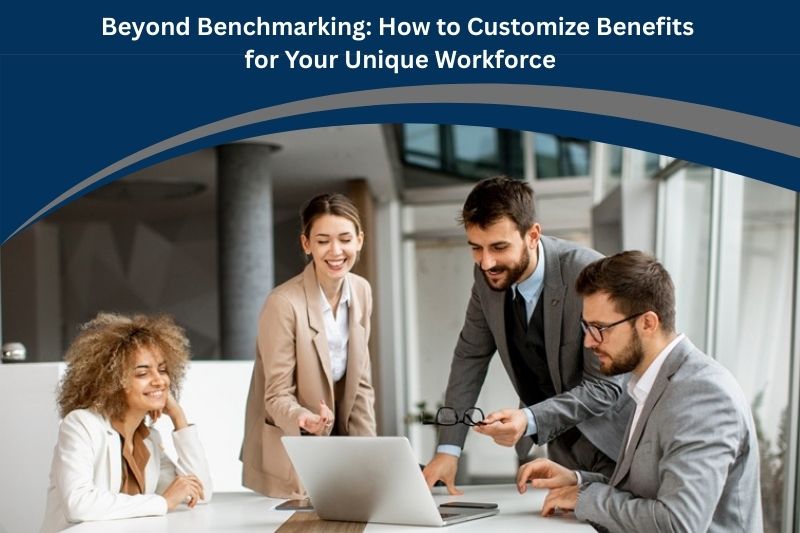
As Q4 approaches, many employers turn to benchmarking to guide their benefits strategy. While benchmarking provides valuable insight into what competitors are offering, it’s only the starting point. The real competitive edge comes from tailoring your benefits program to meet the unique needs of your workforce.
In today’s competitive labor market, a ‘check-the-box’ approach to benefits wastes opportunities and fails to fully engage employees. Customization ensures that your offerings resonate with employees, align with organizational values, and provide the greatest return on investment.
Why Benchmarking Alone Isn’t Enough
Benchmarking compares your benefits against industry standards, providing a snapshot of where you stand. However, what’s considered “average” may not reflect the demographics, culture, or priorities of your team. For example, a tech startup with a young workforce may have different needs than a manufacturing plant with a higher proportion of long-tenured employees.
By relying solely on benchmarking, you risk either overinvesting in benefits your team won’t use or underinvesting in the ones that matter most.
The Case for Customization
Customization begins with understanding your workforce on a deeper level. This includes:
- Demographic trends – Age, family status, and career stage all affect benefit priorities.
- Work patterns – Remote, hybrid, and onsite employees may need different wellness, commuting, and flexibility benefits.
- Employee feedback – Surveys and focus groups reveal which benefits drive satisfaction and which fall flat.
When benefits are designed with these insights in mind, they move from being “perks” to becoming strategic tools for recruitment, retention, and productivity.
Steps to Create a Tailored Benefits Strategy
- Gather Workforce Data
Use HR data, engagement surveys, and health plan utilization reports to understand how employees use existing benefits and where gaps exist. - Segment Your Population
Identify groups with similar needs – for example, early-career employees, parents, or those nearing retirement – and consider benefits that speak directly to them. - Evaluate Cost vs. Impact
Focus on benefits that offer high perceived value without significantly increasing costs, such as flexible scheduling, mental health support, or lifestyle stipends. - Incorporate Flexibility
Benefit options allow employees to choose the perks and coverage that matter most to them, maximizing relevance while controlling costs. - Communicate & Educate
Even the most well-designed plan falls short without proper communication. Year-round benefits education helps employees understand and appreciate the value of what you offer. (Learn more about why education matters in our article The Cost of Confusion: Why Employee Benefits Education Can’t Wait for Open Enrollment.
Benefits Customization in Action
Consider a mid-sized company that discovered through surveys that employees valued mental health services more than an enhanced dental plan. By reallocating funds, the company introduced expanded counseling services and a wellness stipend — moves that significantly boosted morale and reduced turnover.
Similarly, an employer with a large remote workforce shifted resources from commuter benefits to home office stipends and virtual wellness programs, aligning benefits with employee realities.
Looking Ahead: Q4 Renewals as a Strategic Opportunity
The renewal period isn’t just about adjusting premiums and deductibles — it’s your chance to rethink your entire benefits approach. By using benchmarking as a foundation and customization as the blueprint, you can design a program that not only meets market standards but also uniquely positions your organization as an employer of choice.
For additional insights, see our guide on How Childcare and Eldercare Benefits Help Reduce Turnover and Absenteeism.
Customizing Employee Benefits: Key Takeaways
✅ Benchmarking is a starting point, not the finish line.
✅ Tailor benefits to your workforce’s demographics, work styles, and needs.
✅ Use surveys and data analysis to identify high-impact offerings.
✅ Flexibility in benefits design increases perceived value.
✅ Communication is as important as the benefits themselves.
Resources: For additional ideas on modern benefit design, see SHRM’s guide to benefits customization.
Bottom Line
At MSI Benefits Group, we help employers create benefit strategies that attract, engage, and retain top talent. If you’re preparing for Q4 renewals, now is the time to explore a tailored approach that maximizes both impact and budget.
📞 Contact us today to schedule a strategic benefits review and see how customization can work for your organization.